7 Tips How to Choose Between L Port and T Port Valve Balls?

Time:2026-10-18 Author:Sophia
0%

Choosing the correct valve ball can determine whether a process runs smoothly or creates costly maintenance problems. In quarter-turn valves, L-port and T-port designs control flow differently. An L-port ball usually directs media between two connected passages, while a T-port ball can combine, divide, or continue flow through three passages. The difference appears simple. It is not always simple.

This guide explains how to choose between L-port and T-port valve balls using practical engineering factors. Start with the piping arrangement, not the product name. A three-way mixing valve may require a T-port pattern, while a diverting application may perform better with an L-port pattern. Check the required flow positions, pressure rating, temperature range, and fluid compatibility. A ball handling abrasive slurry needs different material and surface protection than one handling clean water or dry gas.

Torque is another detail that deserves attention. A larger ball, tighter seat, or thicker process fluid can increase operating force. Poor sizing may cause actuator overload, leakage, or uneven wear. It can happen quietly. Confirm the bore size, port orientation, seat material, stem design, and connection standard with the manufacturer. Reliable suppliers should provide dimensional drawings, material certificates, inspection records, and pressure-test results.

Some selection decisions remain open to judgment. Cost alone can look attractive, but a cheaper ball may require earlier replacement. Installation space, cleaning access, and future maintenance also matter. By comparing these details carefully, engineers and buyers can make a safer, more dependable choice for each application.
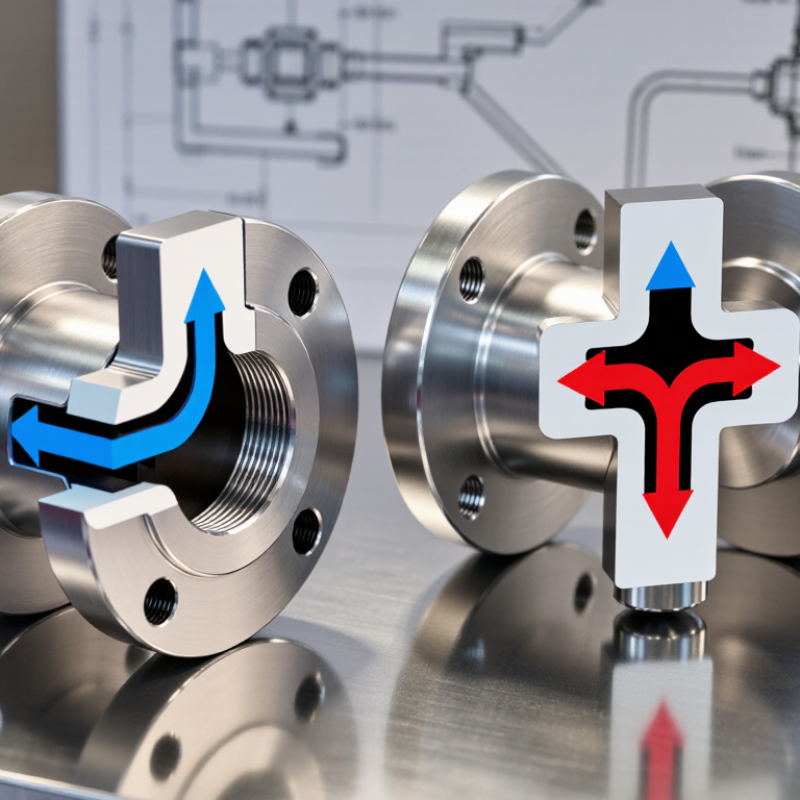
7 Tips How to Choose Between L Port and T Port Valve Balls?

What L-Port and T-Port Valve Balls Are and How They Direct Flow

L-port and T-port valve balls control flow by shaping which passages connect inside a multi-port valve. An L-port ball usually directs media between two selected ports. Its quarter-turn movement can change the flow path clearly. This design suits simple diverting service, where one outlet must remain isolated. A T-port ball offers more routing options. It may connect several ports, divide flow, or combine streams, depending on the valve body and port arrangement. However, not every T-port configuration provides every flow pattern.

Tip 1: Draw the actual piping layout before choosing the ball.
Tip 2: Mark the required flow paths at each handle position.
Tip 3: Check whether the valve must isolate one branch completely.
Tip 4: Confirm the ball’s bore matches the required flow capacity.

A field mistake I have seen is selecting by port label alone. Labels can hide the real internal arrangement. The valve drawing matters more.

Tip 5: Review pressure, temperature, and fluid compatibility with the seat materials.
Tip 6: Consider actuator travel and position feedback, especially for remote operation.
Tip 7: Ask for a tested flow diagram when several ports may connect.

A T-port ball can create an unexpected cross-connection if orientation is misunderstood. That detail deserves a second review. Installation direction, sealing performance, and maintenance access also influence reliable service. In practice, the best choice is not always the most flexible ball. It is the one that produces the intended flow path without guesswork.

How to Compare Their Flow Paths and Port Configurations

Choosing between L-port and T-port valve balls starts with the required flow path, not the valve body size. An L-port ball usually connects one inlet to one of two outlets. It provides reliable flow diversion. A T-port ball can connect three ports, allowing mixing, splitting, or straight-through flow. However, internal drilling patterns vary. Check the manufacturer’s sectional drawing before selection.

Map the process lines on paper. Mark the inlet, outlets, and required switching positions. Then compare these seven details:

port alignment, switching sequence, pressure drop, dead zones, sealing surfaces, actuator stops, and cleaning access.

Tip one:

confirm whether flow must divert or mix.

Tip two: inspect every possible handle position.

Tip three: calculate the required flow coefficient.

Tip four: identify unused cavities that may trap fluid.

Tip five: check whether the ball permits simultaneous outlet flow.

Tip six: verify actuator rotation and travel limits.

Tip seven: match the port pattern with maintenance procedures.

In field inspections, an L-port often feels simpler during operation. It can reduce accidental cross-connection between outlets. A T-port offers greater routing flexibility, but its open positions need clearer control logic. Small configuration errors can send fluid into the wrong branch. That risk deserves attention. Compare the actual bore openings, not only the external pipe layout. Also review pressure ratings, temperature limits, and seat compatibility with the service fluid. Port terminology is not always consistent across suppliers. Request certified drawings and test data when the piping arrangement is critical. A practical trial with a transparent schematic may reveal a problem that calculations missed.

When an L-Port Valve Ball Is the Better Choice

When an L-Port Valve Ball Is the Better Choice

An L-port valve ball suits systems that need simple flow diversion. Its internal passage turns 90 degrees, directing fluid from one inlet to either of two outlets. This design works well in a tank farm, a sampling line, or a skid with standby equipment. Operators can select one branch and isolate the other. That control is clear.

Keep the flow path in mind. An L-port ball is not normally the right choice for mixing three connected lines. A T-port design may handle that requirement better, depending on the ball pattern and manufacturer’s specifications. Check the required port alignment before ordering. A small drawing can prevent an expensive installation mistake. Also compare pressure rating, fluid temperature, seat material, and actuator torque. Thick fluids may require different operating torque than clean water. In field checks, I have seen valves fail early because the actuator was chosen from pipe size alone. That shortcut is tempting, but incomplete. Cycle frequency matters too. Frequent switching can increase seat wear, especially when particles pass through the valve. Confirm the shutoff direction and test the valve under actual operating conditions. A perfect schematic can still behave differently after installation.

When a T-Port Valve Ball Offers Greater Control

7 Tips How to Choose Between L Port and T Port Valve Balls?

When a process needs controlled flow between several pipelines, a T-port valve ball can offer greater flexibility than an L-port design. Its passage can connect one inlet with two outlets, or combine two streams into one line. This arrangement supports diversion, mixing, and temporary isolation during maintenance. In practical installations, operators should confirm the required flow paths before selecting the ball pattern.

Tip 1: Map every operating position. A simple piping sketch can expose an unexpected connection.

Tip 2: Check whether simultaneous flow is acceptable. A T-port ball may allow flow between three passages, but not every system can tolerate that condition.

Tip 3: Compare pressure drop, temperature, and media characteristics with the valve’s documented limits. Small details matter.

T-port control is useful in batching systems, sampling lines, and circulation loops. Handle position should be clear and repeatable, especially near equipment or walkways. A locking device may prevent accidental movement, although it can slow urgent adjustments. That trade-off deserves honest review.

I have seen selection decisions focus on port shape alone, while actuator torque and sealing performance received less attention. That is a mistake.

Also, a T-port ball does not automatically provide precise throttling. Frequent partial opening can increase wear and turbulence.

For demanding control duties, verify the manufacturer’s flow data and test the full operating sequence before installation.

How to Select the Right Valve Ball for Your Piping System

How to Select the Right Valve Ball for Your Piping System

Selecting an L port or T port valve ball starts with the piping layout, not the valve catalog. Map every inlet, outlet, and required flow direction on paper. An L port ball usually diverts flow between two ports. A T port ball can connect three ports, depending on its position. Draw the actual operating paths. It prevents expensive confusion.

Check seven details before choosing. First, identify whether the valve diverts or mixes fluid. Second, confirm the required flow pattern at each handle position. Third, compare pressure drop, especially in narrow lines. Fourth, check whether the actuator can provide the needed rotation and torque. Fifth, examine cleaning requirements and possible dead zones. Sixth, match the ball and seat materials with temperature, pressure, and fluid chemistry. Seventh, plan maintenance access before installation.

Small details matter. A T port may create an unwanted crossover during switching if the piping sequence is misunderstood. An L port may isolate one branch more clearly, but it cannot provide every three-way route. In field reviews, operators sometimes select by pipe size alone. That is risky. Size is only one piece. Test the proposed positions with a simple flow diagram, then verify the supplier’s porting drawing. I would also question any design that depends on a handle label without confirming the internal ball orientation. Reality can be less tidy.

7 Tips: How to Choose Between L Port and T Port Valve Balls? — How to Select the Right Valve Ball for Your Piping System

No. Selection Tip L-Port Valve Ball T-Port Valve Ball Best-Fit Piping Requirement Practical Recommendation
1 Define the required flow path Typically routes flow between one common port and either of two other ports. It is commonly used for diverting flow or selecting one of two lines. Can connect the common port to either branch and, depending on the valve design, can also connect all three ports simultaneously. Systems requiring a defined two-way diversion path or a mixing and distribution path. Choose L-port for selective routing; choose T-port when multiple flow combinations are required.
2 Check whether positive shutoff is needed Usually provides clear port isolation in selected positions because the ball passage does not normally create a straight-through connection between all ports. May connect two or three ports in certain positions, so the switching sequence and ball-port geometry must be checked carefully. Processes where cross-flow, backflow, or unintended communication between branches could cause a safety or process problem. Use an L-port arrangement when the operating sequence requires reliable separation between selected branches; verify isolation with the valve supplier and applicable standards.
3 Match the valve to mixing or diverting duty Primarily suited to diverting one inlet stream to one of two outlets, or selecting one inlet from two alternatives. More suitable for combining streams, distributing one stream to multiple outlets, or creating several operating configurations. Chemical, water treatment, utility, and process piping systems with routing or blending requirements. Select T-port for mixing or multi-directional distribution; select L-port for simpler diversion or source selection.
4 Verify the actuator rotation and position logic Often uses a 90-degree operating sequence, but the actual flow pattern depends on the ball bore, port arrangement, and actuator orientation. May require additional defined positions or a carefully configured switching sequence to prevent an undesired temporary flow path. Manual, electric, or pneumatic actuation with position indicators, limit switches, or automated control systems. Confirm the required rotation direction, end positions, actuator torque, and fail position using the valve flow diagram before installation.
5 Consider pressure, temperature, and media compatibility The port style does not determine pressure or temperature capability. Performance depends on the valve body, ball, seat, stem, seals, and pressure class. Has the same basic material and rating considerations as an L-port design; multi-port flow can affect pressure drop and operating torque. Liquid, gas, steam, corrosive, abrasive, hygienic, or high-temperature services. Select the port pattern only after confirming body material, trim material, seat type, seal material, pressure rating, temperature range, and media compatibility.
6 Evaluate pressure drop and flow capacity A properly sized L-port ball can provide a relatively direct passage in its selected operating position, but the actual pressure drop depends on bore size and valve construction. Flow capacity varies with the T-bore geometry and the active flow path. Some configurations may introduce more resistance than a full-port straight-through path. Pumping systems, compressed gas lines, high-flow utilities, and applications with strict energy or velocity limits. Compare the manufacturer’s flow coefficient data for each operating position and size the valve for the required flow rate and allowable pressure loss.
7 Check installation, maintenance, and safety requirements Generally easier to specify when the system has two clearly defined operating routes and straightforward position indication. Requires especially clear port labels, flow diagrams, interlocks, and operating procedures because several flow paths may be possible. Systems where incorrect switching could interrupt production, contaminate fluids, create pressure hazards, or damage downstream equipment. Document every allowable position, use position feedback where needed, and confirm maintenance access, spare parts, testing, and applicable piping codes.
Quick selection guide: Choose an L-port valve ball for simple diverting or line selection with defined separation between branches. Choose a T-port valve ball when the piping system requires mixing, distribution, or several selectable flow paths. Always confirm the complete valve assembly’s pressure rating, temperature limits, materials, flow coefficient, actuator arrangement, and required flow diagram.

FAQS

What is the main difference between L-port and T-port valve balls?

An L-port ball usually diverts flow from one inlet to one of two outlets. A T-port ball can connect three ports. It may support mixing, splitting, or straight-through flow. The internal drilling pattern must be verified.

When is an L-port valve ball a better choice?

Choose an L-port ball when the system needs clear flow diversion. It can select one branch while isolating another. This suits sampling lines, standby equipment, and tank connections. Simple routing helps reduce accidental cross-connection.

When might a T-port valve ball be more suitable?

A T-port ball may suit systems requiring three-way routing or controlled mixing. Its open positions need clear operating logic. Small handle-position errors can send fluid into the wrong branch. More flexibility also means more responsibility.

How should the required flow path be checked before selection?

Draw every inlet, outlet, and operating position on paper. Mark the intended direction with arrows. Compare each drawing with the ball’s actual bore openings. A simple sketch can expose an expensive mistake.

Why should external pipe layout not be trusted alone?

The outside piping may look correct while the internal ball connects different ports. Port terms can vary between suppliers. Request a sectional drawing and relevant test information. Assumptions are convenient, but they are not proof.

What operating factors should be checked with the valve ball?

Check pressure drop, temperature limits, fluid chemistry, seat compatibility, and required flow capacity. Thick fluids may need greater actuator torque than clean water. Pipe size alone is not enough. That shortcut often needs rethinking.

How can switching and actuator problems be prevented?

Confirm the actuator’s rotation, travel limits, torque, and shutoff direction. Inspect every handle position before installation. Frequent cycling can increase seat wear, especially with particles. A perfect schematic may still behave differently onsite.

What cleaning and maintenance issues matter during selection?

Look for unused cavities where fluid could remain trapped. Review cleaning access and maintenance procedures. Compare sealing surfaces and possible dead zones. The overlooked corner may become the real problem.

Conclusion

Choosing the right valve ball is essential for achieving reliable flow control in a piping system. L-port and T-port valve balls are designed with different internal passageways that determine how fluid moves between connected ports. An L-port configuration typically directs flow between two selected ports, making it suitable for diverting or isolating flow. In contrast, a T-port configuration can connect multiple ports at once, allowing greater flexibility for mixing, diverting, or routing fluid.

To understand how to choose between L-port and T-port valve balls, compare their flow paths, port arrangements, operating requirements, and control objectives. An L-port valve ball is often the better choice when simple two-way switching and clear flow separation are required. A T-port valve ball may be preferable when the system needs multi-directional flow control or more operating options. Consider pipe layout, pressure conditions, fluid characteristics, maintenance needs, and the desired flow sequence before making the final selection.

Sophia

Sophia

Sophia is a dedicated marketing professional with an exceptional depth of knowledge about her company's products and services. With a keen understanding of market trends and customer needs, she crafts insightful blog posts that not only inform but also engage readers, enriching the company’s online......